PRESS STATEMENT
For Immediate Release
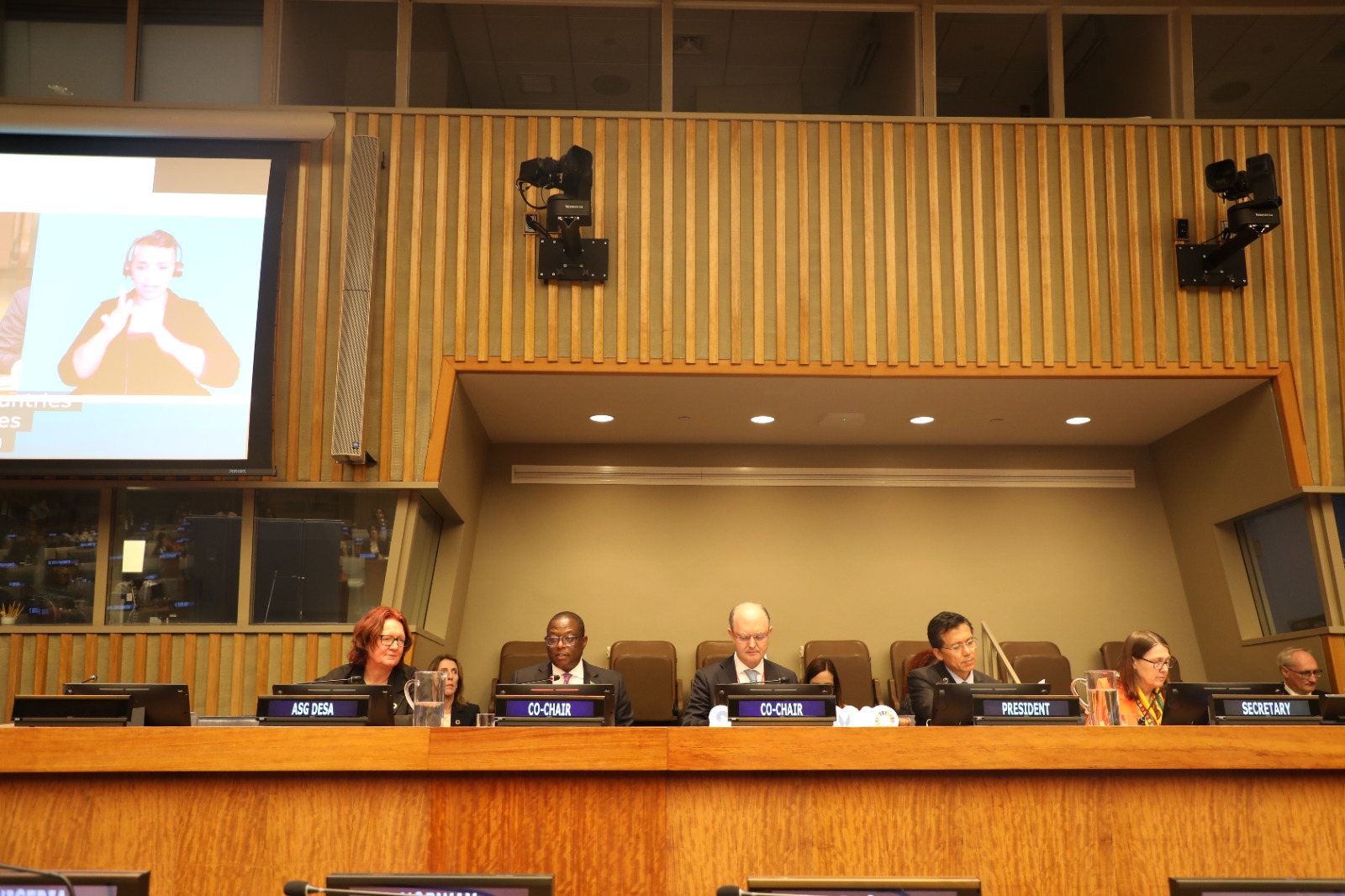
New York, 8th May 2026 – The eleventh annual Multi-Stakeholder Forum on Science, Technology and Innovation for the Sustainable Development Goals (STI Forum) has concluded with a strengthened call for inclusive, equitable and cooperative action. The Forum was co-chaired by Zambia and Austria.
The two-day Forum held at United Nations (UN) Headquarters noted that the Sustainable Development Goals (SDGs) were off track with only 35 percent on track.
During the closing session, Zambia’s Permanent Representative to the UN, Dr. Chola Milambo stressed that digital, scientific and innovation divides continue to constrain progress. He underscored this point by highlighting the persistent barriers for women, youth, least developed countries (LDCs) and Small Island Developing States (SIDS).
H.E. Gregor Koessler of Austria underscored that technology alone is insufficient, reaffirming that innovation must be paired with inclusive governance, equitable financing, strong institutions, and international cooperation.
Across thematic sessions on water and clean energy, participants warned that no SDG 6 target is currently on track and that hundreds of millions still lack access to electricity. However, advances in AI-enabled monitoring, decentralized renewables, and nature-based solutions offer concrete opportunities when paired with integrated planning and local capacity building.
The Forum reaffirmed the need for human-centred, development‑grounded governance frameworks and strengthened ongoing discussions through the Global Dialogue on AI Governance. The need for STI to inform policy and decision making to realise development impact resonated throughout the Forum.
Looking ahead to the High-level Political Forum and the 2026 UN Water Conference, the Co-Chairs urged Member States and stakeholders to strengthen international scientific cooperation and invest in local innovation ecosystems.
President of the Economic and Social Council (ECOSOC), H.E. Lok Thapa, observed that warned that no water or energy target is on track. He underscored that technology alone cannot deliver the SDGs but needs to be accompanied by enabling national and global ecosystems that facilitate access and application to address development needs.
He reaffirmed that artificial intelligence must be designed for all, not just the powerful.
Mr. Thapa further underlined the Forum’s outcomes by calling for urgent action such as bridging digital and scientific divides, investing in local innovation, and ensuring that emerging technologies uphold human dignity, sustainability and resilience.
He concluded by reaffirming that the future of sustainable development depends on science, technology and innovation that benefit every person and every country.
Beyond co-chairing the Forum, Zambia participated in the overall programme by featuring a young innovator, Chilumba Mutale who showcased his innovation in e-electronic waste to a global audience that included policy makers, scientists, think-tanks and civil society. Zambia also co-hosted two side events to forge partnerships in STI.
Issued by:
Namatama Njekwa
First Secretary for Press and Public Relations
Permanent Mission of the Republic of Zambia to the United Nations